

Fluorescent lighting is nearing its end as the Minamata Convention mandates a global phase‑out of mercury‑containing lamps by 2027. With 147 countries agreeing to eliminate their manufacture, import and export, the shift accelerates the transition to cleaner, energy‑efficient, mercury‑free lighting solutions like LEDs. The Minamata Convention itself exists because mercury pollution caused severe illness and death in Japan—known as Minamata disease—highlighting the long‑term danger of mercury in consumer products.
Why does this matter?
Fluorescent lamps rely on mercury to produce light, which becomes hazardous when lamps break, are improperly disposed of, or enter landfills. Mercury exposure is linked to neurological damage and environmental contamination.
By banning the manufacture, import, and export of fluorescent lamps by 2027, participating countries will eliminate an estimated 158 tonnes of mercury pollution by 2050. This includes mercury from the lamps themselves and mercury released from coal fired power plants due to fluorescents’ higher energy use.
LEDs use up to 40% less energy than fluorescents, significantly cutting CO₂ emissions. In fact, the global transition to LED lighting could avoid 2.7 gigatonnes of CO₂ emissions by 2050.This means lower electricity bills for businesses and households—and a major contribution to climate change mitigation.]
Switching to mercury free LED lighting supports cleaner air; reduced hazardous waste; lower operating costs for businesses; and longer lasting, more reliable lighting infrastructure.
What are the key differences between LED and fluorescent lighting?
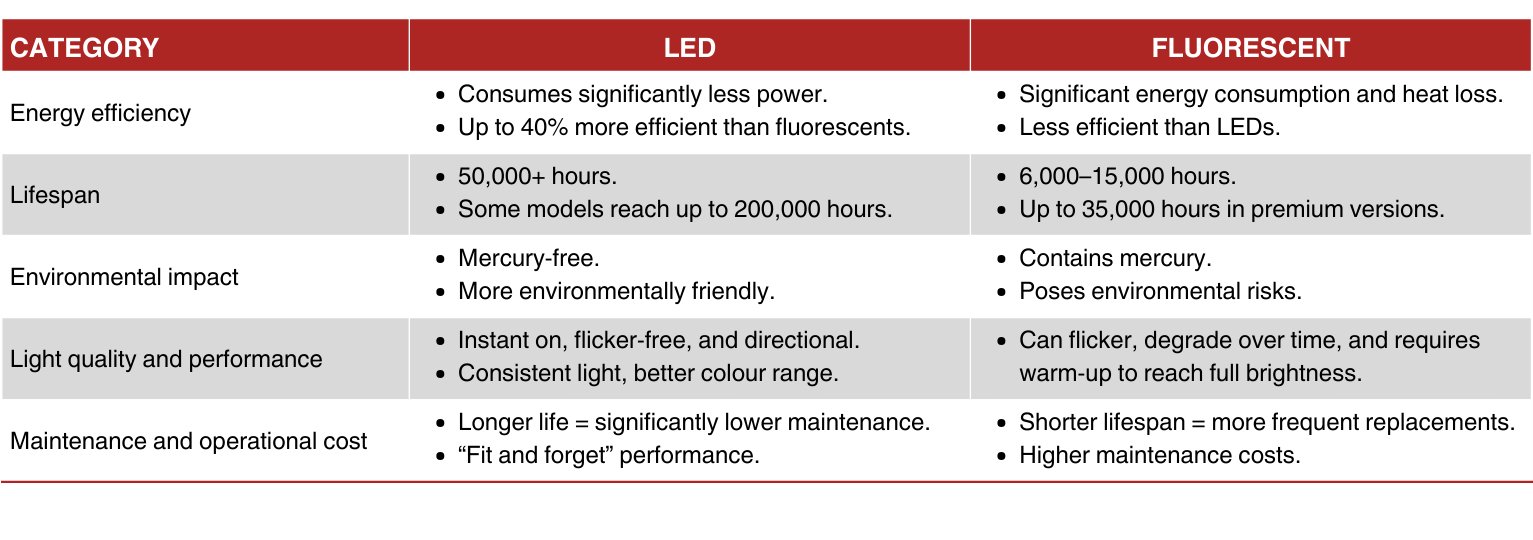
Fluorescent lighting dominated for decades, but it is energy‑intensive, contains toxic substances, and is outperformed by LED on every meaningful metric—efficiency, longevity, environmental impact, and cost. The phase‑out signals a global shift toward safer, sustainable, future‑proof lighting technologies.
To learn more about LED options available to you, visit your local Active Electrical Suppliers Ltd branch or visit us at www.goactive.nz.
This article is intended for general informational purposes only and does not constitute professional advice.